


Curtiss SB2C Helldiver
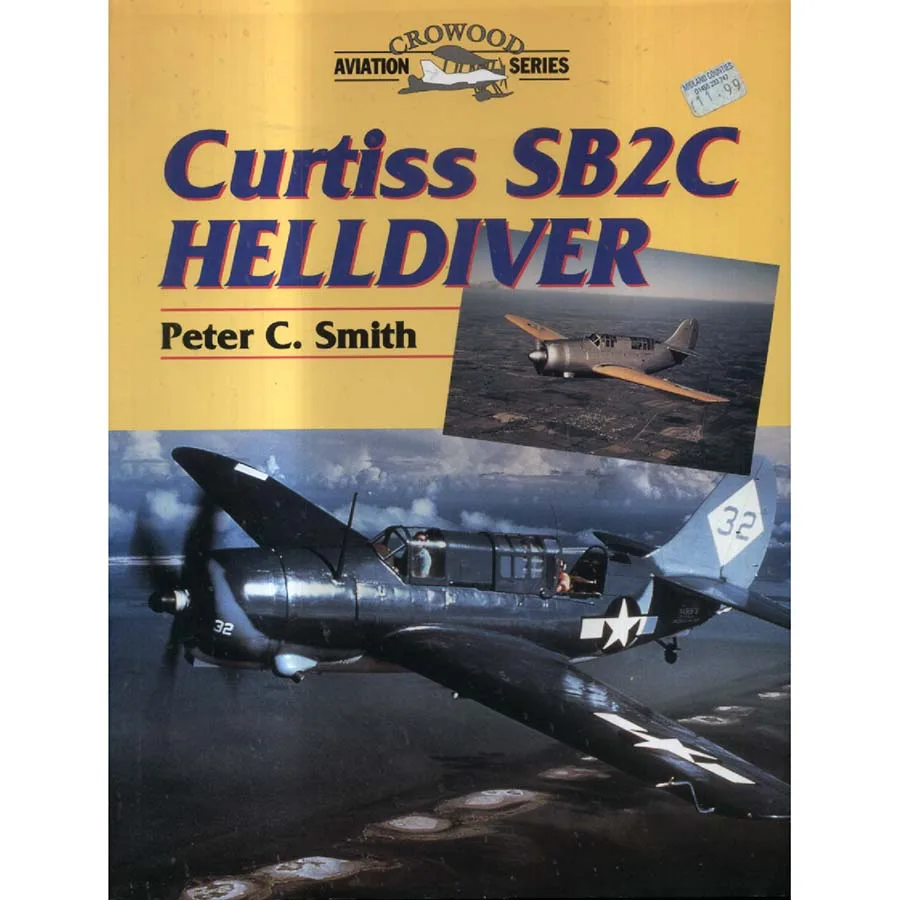
Publisher: Crowood
Format: Hardback
ISBN: 9781861261410
The Curtiss SB2C Helldiver was intended to replace the much-loved Douglas SBD Dauntless with something larger, faster and more heavily armed. What the US Navy initially received was larger, certainly, but also unstable, underpowered, mechanically troublesome and burdened with several hundred modifications before anyone felt entirely comfortable sending it to sea. Its official designation, SB2C, was soon translated by exasperated crews as “Son of a Bitch, Second Class,” which was not the interpretation preferred by the manufacturer’s publicity department.
In this detailed history, dive-bomber specialist Peter C. Smith follows the Helldiver from its difficult conception through development, production and combat service. The Navy demanded an aircraft capable of carrying a substantial bomb load while remaining short enough for two to fit on an aircraft-carrier lift. Curtiss obligingly attempted to place a large aeroplane inside a small one, with results that kept engineers, test pilots and accident investigators fully occupied.
The prototype suffered structural failures, poor handling and directional instability, while production aircraft arrived with faults involving electrics, hydraulics and general build quality. The programme attracted official investigation, the Navy demanded a mountain of alterations and the Helldiver entered combat much later than expected. Its crews called it “the Beast,” although whether this was affectionate depended largely upon whether the speaker had just attempted to land one on a moving carrier.
Yet the SB2C eventually became an effective and formidable weapon. Improved engines, a four-bladed propeller and successive modifications transformed the later marks into capable carrier-based strike aircraft. Armed with bombs, cannon, machine guns and rockets, Helldivers attacked Japanese warships, airfields and shore installations across the Pacific from 1943 until the end of the war. They played an important part in the US Navy’s advance towards Japan, demonstrating that an aeroplane may begin its career as an engineering scandal and still conclude it by sinking things.
Smith examines the principal variants, including Canadian-built machines and the land-based A-25 Shrike ordered by the US Army Air Forces, which decided by the time it arrived that it no longer particularly wanted a dedicated dive bomber. Post-war service with foreign operators is also covered, along with the Helldiver’s place as the last purpose-built dive bomber used by the US Navy. By then rockets and fighter-bombers were making the near-vertical bombing dive less essential, depriving future pilots of the opportunity to point several tons of machinery directly at the ground and trust that everyone had done the arithmetic correctly.
Illustrated throughout and written with Smith’s characteristic attention to operational detail, this is both a technical history and an account of the men who had to make the aircraft work in combat. It will appeal to naval aviation enthusiasts, modellers, Pacific War historians and anyone fascinated by military equipment that overcame a disastrous introduction through the traditional expedient of modifying almost everything.
Published by Crowood in 1998, this copy is in Near Fine condition. It has aged considerably more gracefully than the original prototype and should require substantially fewer than 880 alterations before use.
Keep browsing: See more War books Other books by Peter C Smith
